11/14/2025
Optimizing Work Shoe Performance with Dr. Geoffrey Gray
Part 2: Traction
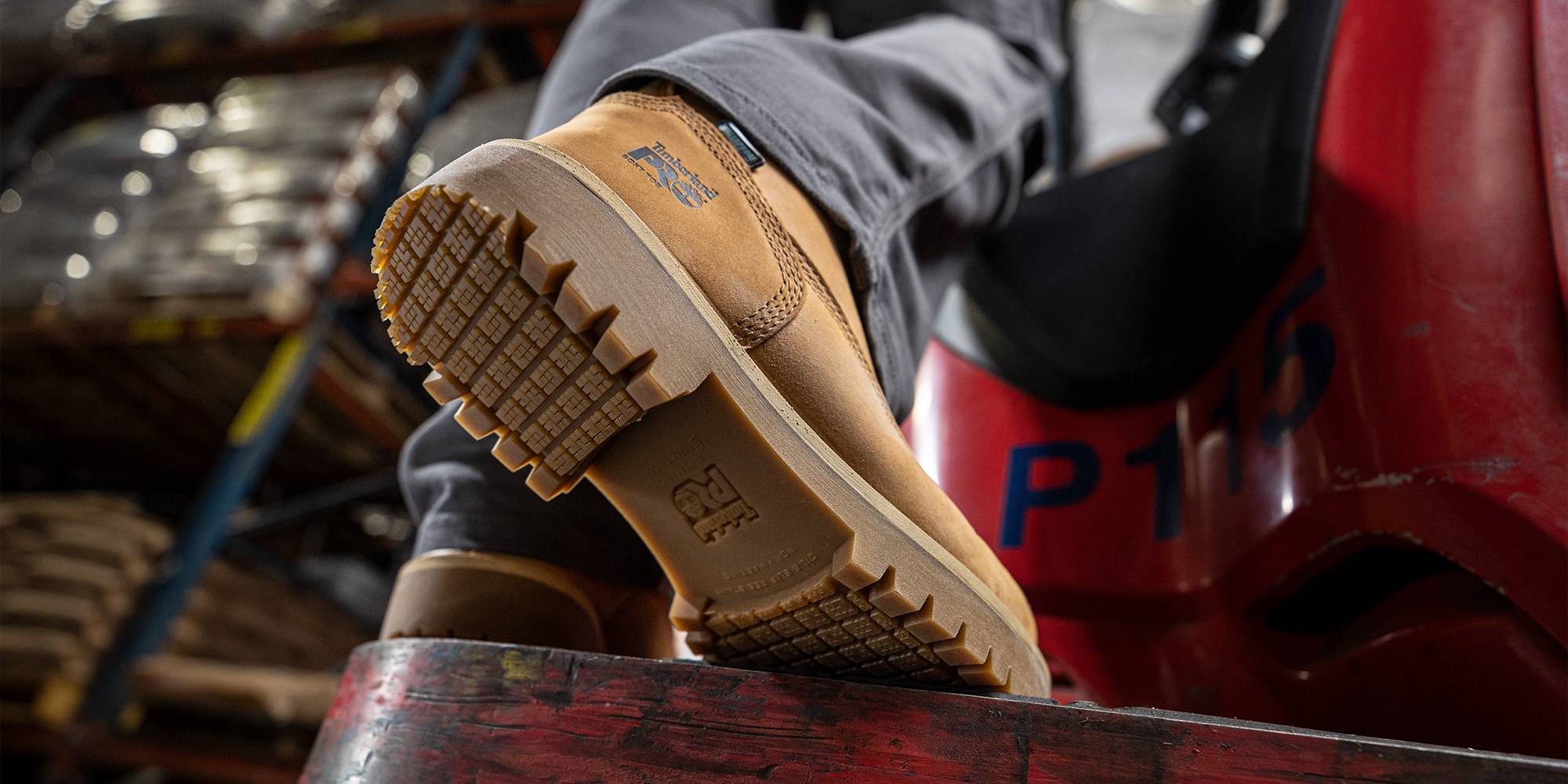
In Part 2 of this series, Heeluxe™ founder Dr. Geoffrey Gray walks us through the ins and outs of occupational shoe traction. Whether your team is clocking in at a warehouse, a hospital or an auto shop, the right outsole can be the difference between a confident stride and a dangerous slip-and-fall accident.
Dr. Gray walks us through the mechanics of what makes a shoe grip well under pressure, and why the answer isn’t one-size-fits-all. From oily garage floors to cornmeal-covered factory surfaces, different jobs bring different challenges. The good news is that shoe design is catching up. As more research emerges about how specific contaminants affect traction, we’re entering a new era of slip resistance. And with insights from Dr. Gray, we’re not just watching the future unfold, we’re stepping into it.
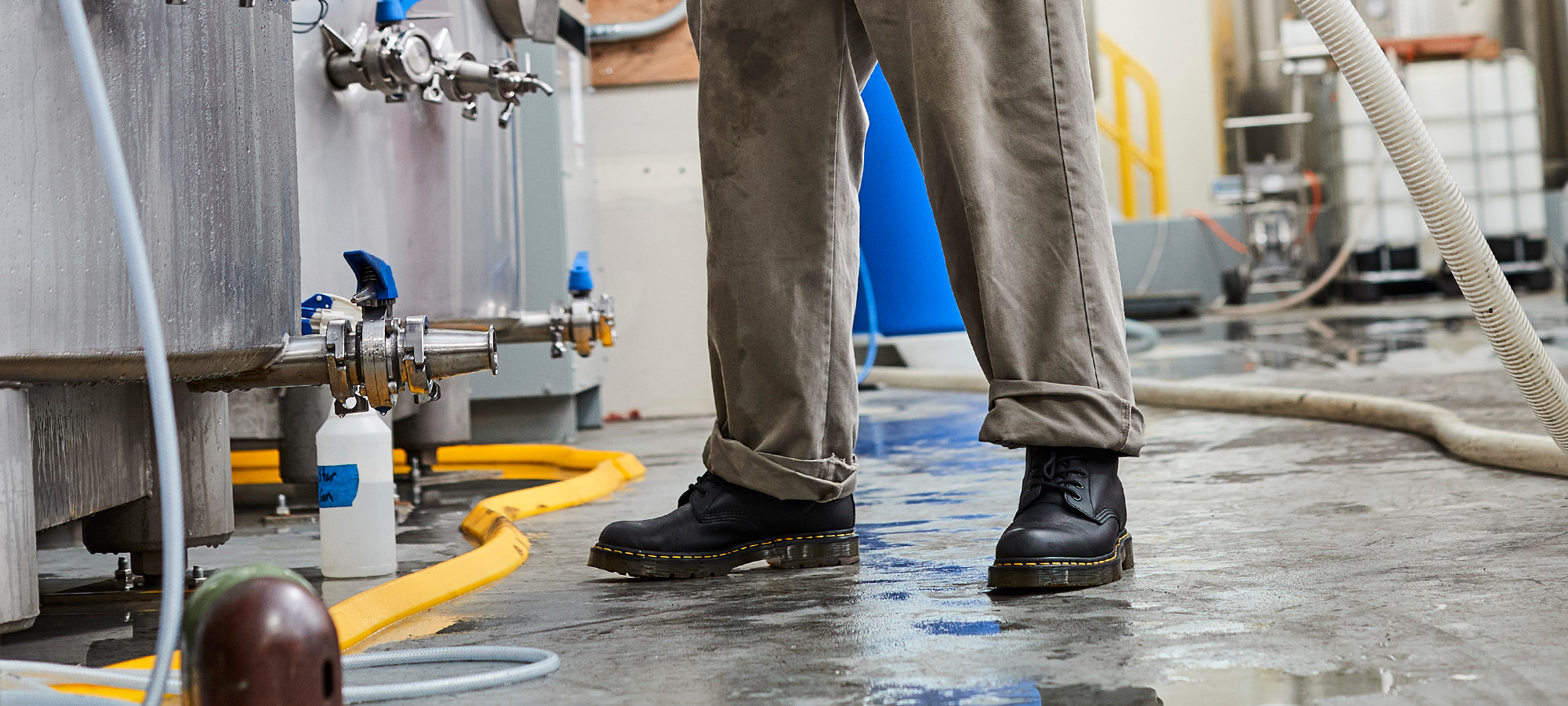
The Future of Slip Resistance
According to Dr. Gray, there are exciting things to look forward to in the world of shoe traction. The five main areas that will be getting the most attention in coming years include:
- Materials are being refined to improve traction. Traction isn’t just about tread pattern; other materials in the shoe play a major role. For example, the midsole’s thickness and softness affect how well the outsole performs. A softer midsole compresses under load, allowing the outsole to flex and mold to the floor for better contact. But if the midsole is too soft or too firm, it can actually reduce traction by limiting tread effectiveness. The type of foam matters too:
● EVA conforms well to flat surfaces, enhancing grip indoors, but can reduce lug bite on uneven ground, leading to slips.
● Polyurethane (PU) is denser and more stable, making it ideal for outdoor work boots and rugged environments.
● Dual-density or hybrid foams combine both benefits, using softer zones to increase surface contact and firmer zones to keep tread engaged.
- Hard vertical lugs for outdoor muddy environments. In outdoor situations where surface contaminants include soft materials like mud or dirt, hard outsoles with vertical lugs are always the way to go. The harder tread material will enable it to push deep into the ground to allow for more grip; meanwhile, the vertical alignment of the lugs enables the contaminant to fall away and helps prevent clogging.
- Hybrid outsoles. Lots of workers need grip on wet floors; others need it in mud or on gravel. But some workers need both. Using traction zones allows shoe manufacturers to combine liquid channels with v-shaped lugs, for example, to give wearers the best of both worlds. And traction zones can be used in lots of ways to give employees maximum grip, even with changing work conditions. Dr. Gray predicts that the hybrid outsole will be one of the biggest areas of work shoe opportunity and innovation in coming years because it can be optimized based on workers’ needs.
- Wider, beveled heels. Imagine taking a step wearing a shoe with a completely flat outsole. The moment your heel touches the floor, the contact area between your shoe and the floor becomes only a small fraction of what it is when you’re standing. It’s so small in fact that on a slick surface, that small contact area can easily lead to slips. Heel design helps solve the problem. More surface area in the heel means a larger contact area with the floor, giving you a major traction boost. By widening the heel and adding a bevel that matches the natural angle of foot strike, the shoe creates more initial contact area with the floor, delivering a noticeable boost in traction and stability.
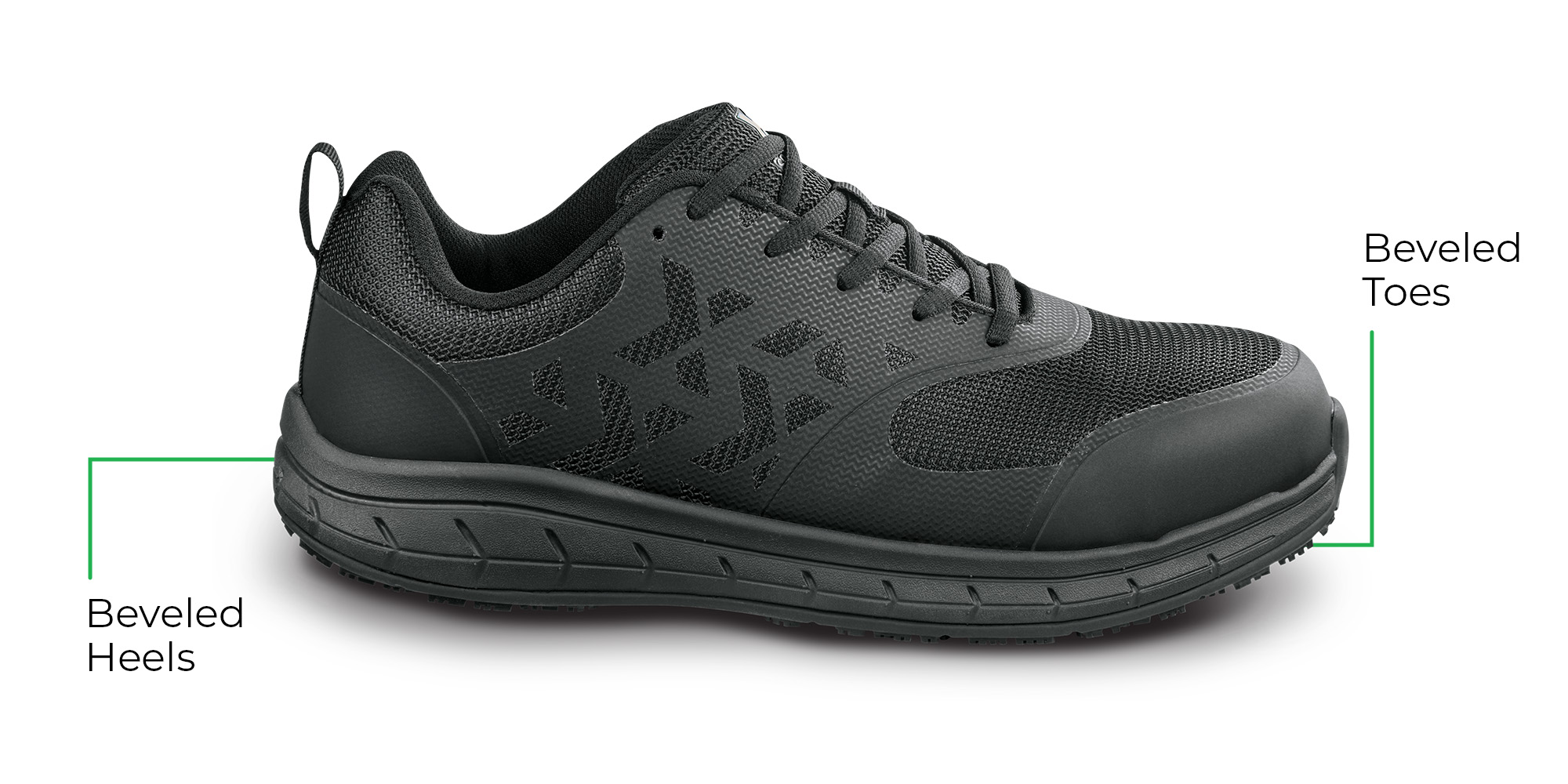
- Beveled toes. When we walk, our toes only clear the ground by about a ½ inch, barely enough space to avoid tripping on common obstacles like carpet edges or cords, which are often just as high. Our feet will barely clear those as it is, but when we’re wearing a classic work boot, which has a rubber toe extending slightly in the front, the situation gets dicier. In fact, we usually have to compensate by lifting our feet a little higher to gain enough clearance. At the end of the day, we’re more tired and experiencing more risk. That’s why rocker styles have come on the scene in recent years. They offer a slightly rounded toe, often found on athletic shoes, and it’s making more and more headway in the safety shoe world. They raise the clearance height by a ¼ inch or more (that’s a 50% increase in toe clearance), making walking in work shoes feel more natural and reducing the odds of tripping and falling.
We’re all about looking to the future. We also know the importance today of wearing shoes with fresh, unworn outsoles. But understanding when it’s a good idea to replace a pair of slip-resistant shoes is the question of the ages for lots of safety managers. Fortunately, Dr. Gray makes it simple.
Knowing When an Outsole is Done For
Having an outsole that suits your work conditions is key, but no outsole lasts forever.
Many organizations implement safety shoe programs, and that’s excellent for boosting participation and helping ensure employees are wearing their safety shoes. But there’s even more that can be done to take this important work to the next level.
Dr. Gray notes that outsole performance and longevity should be based primarily on factors like surface material, contaminant exposure, employee weight, employee gait, walking speed and more. And since the impact of those factors are hard to predict, we need to take extra measures to make sure our team members are fully protected on the job. Another step in the right direction includes offering shoe subsidies, which allow employees to replace shoes more frequently. And since almost ⅓ of slip-resistant shoe outsoles will be worn down in less than six months, more frequent renewal dates are ideal.
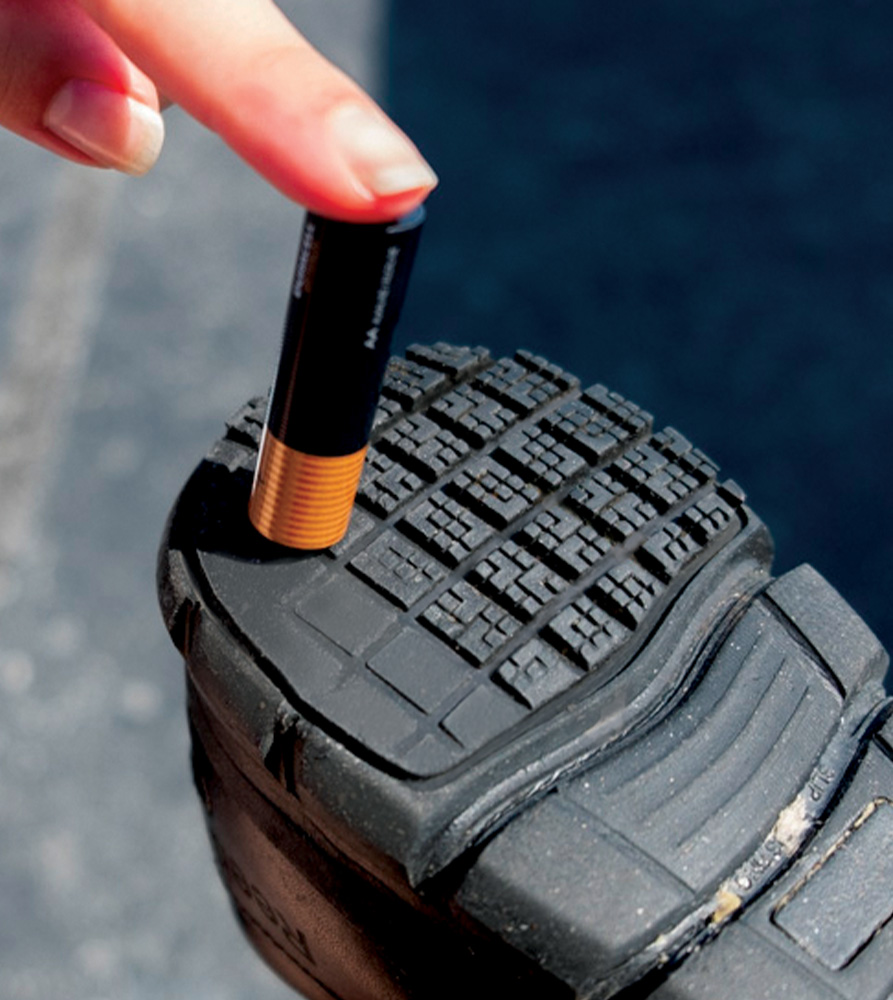
On top of that, it’s critical for employees to perform safety checks on a regular basis because the rate a shoe wears varies from person to person. To get it done we recommend Dr. Kurt Berschorner’s (from University of Pittsburg) tried and true battery test. Just place the end of a AA battery over the shoe outsole. If the battery end doesn’t hide the worn out area, the shoe needs to be replaced. Like the quarter test for a windshield chip.
There you have it: traction is about to make some huge waves, and we’re excited to be right there at the forefront. In the next article in this series, Dr. Gray helps us explore one of the things that matters most to workers: cushioning.
Categories: Product Information | Authored by: Bryan McMillan, Copywriter | Posted: 11/14/2025
Related Content
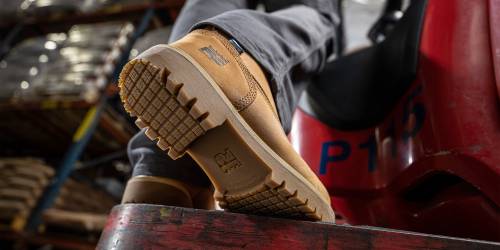
Optimizing Work Shoe Performance with Dr. Geoffrey Gray
Part 2: Traction
In Part 2 of this series, Heeluxe™ founder Dr. Geoffrey Gray walks us through the ins and outs of occupational shoe traction. Whether your team is clocking…
Optimizing Work Shoe Performance with Dr. Geoffrey Gray
Part 1: Overview
If you want to understand your employees’ safety shoe needs on a deeper level, then you’ve got to rely on the gurus who live and breathe safety. For this four…
Blumaka + SR Max®: Where sustainability meets slip-resistant footwear.
“Sustainability.” We hear that word get thrown around a lot nowadays. Sometimes it’s a result of genuine efforts to build a better future.…